
If water is coming through your condo ceiling from the unit above, do four things in this order. Keep people away from the wet area. Switch off power to that room only if you can reach the breaker without stepping in water. Move belongings and set out containers. Then call building management at once. Then photograph everything. Water usually stops only when someone shuts off the supply to the unit above, and that is up to management or the neighbor.
Who ends up paying is a separate question from who acts first. It turns on your association documents and on what failed, so do not argue about it while water is falling. Collect evidence, get the source found, and sort out responsibility once the ceiling is dry.
This page covers the first hour, the paperwork, the insurance conversation and the point where a plumber with leak detection equipment can end the guessing.
The first hour: what to do with water still falling
Speed limits the damage, but nothing here should put you at risk.
The ceiling is bulging, sagging or dripping near a light
Stay out from under it and keep everyone clear. Water pooled above drywall is heavy and can bring the ceiling down. Do not poke it, cut it or try to drain it yourself.
Water is near outlets, switches or a fixture
Turn off the breaker for that room only if the panel is dry and you can reach it standing on a dry surface. If you cannot, leave the room alone and tell management and the electric utility. Never touch electrical equipment while standing in water.
Furniture, rugs and electronics are in the drip zone
Move what you can easily lift to a dry room. Pull rugs back, put plastic or towels under the drip, and set buckets under the heaviest streams.
You cannot tell if the water is from your own plumbing
Check your unit's own water supply by closing its main shutoff for a few minutes. If the drip continues, the source is above you or in a shared line.
Document everything before anything is cleaned up
Insurance and association claims run on evidence. Good records are cheap to make while water is still visible.
Photograph and video the ceiling and walls
Take wide shots of the room and close-ups of stains, drips and damaged items. Photograph the clock or your phone's timestamp so the date and time show.
Write a short timeline
Note when you first saw water, what you did, and when you called management. A few lines in your notes app is enough.
Notify management in writing
Call first, then send an email or message that names the unit, the date and the problem. A written notice creates a record that does not depend on anyone's memory.
Keep damaged items until they are documented
Do not throw out soaked belongings until they are photographed and, if your insurer asks, inspected. Dry out what is safe to dry.
Ask about the source
Ask management whether the water is from the unit above, a shared pipe, or an air conditioning line, and who is arranging the repair.
Where the water comes from and who acts first
The pattern of the leak gives clues. A plumber confirms the source, but this table shows where to start.
| What you see | Possible source | Who acts first | What to document |
|---|---|---|---|
| Steady drip in one spot, near a bathroom wall | Supply or drain line in the unit above | Management, who contacts the unit above | Photos of the stain and time of first drip |
| Water along a long line of the ceiling | A pipe running through the ceiling space | Management and a plumber | The path and length of the stain |
| Water at several units on the same side | A shared riser or stack | Management right away | Which units are affected and when it began |
| Drip tied to hot weather and cooling use | An air conditioning drain or condensate line | Management or an HVAC contractor | Whether the drip stops when cooling is off |
| Drip only after the neighbor uses a shower or washer | A fixture, drain or appliance connection above | The neighbor, with management | The activity that sets it off |
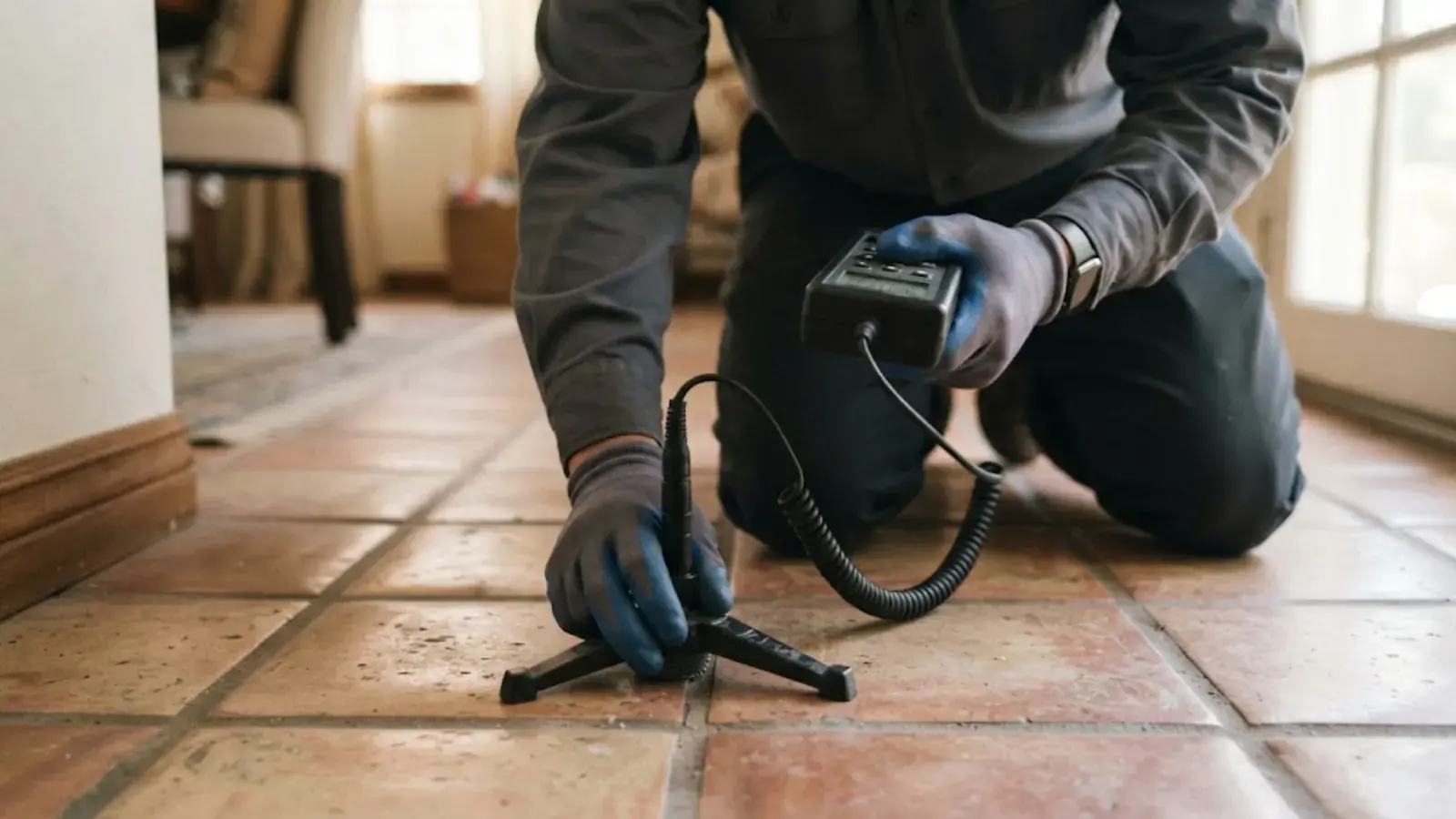
When nobody can find the source, leak detection using pressure tests, listening gear and moisture meters pinpoints it without opening more walls than needed. If a pipe has split, burst pipe repair covers the fix.
Why ceiling leaks are so common in Hallandale Beach buildings
Census housing tables show that about 70 percent of Hallandale Beach housing units are in buildings of 20 or more units, and 16,567 units are in buildings of 50 or more. In a building that size, many households share walls, risers and ceiling spaces, so a leak in one unit often reaches another within hours. That is why your first call goes to management: they can reach the shutoff for the unit above or the riser, which you cannot.
The same Census sources put the median home here at 1975 construction. Plumbing in older buildings may be original, and shared lines age together, so a repeated leak from above can point to pipe that is simply due for work. Ask management whether earlier leaks were reported on the same line, and keep your own record of each event.
Who is responsible for the damage
We cannot tell you who owes what, because it depends on your association's declaration, bylaws and rules, and on what failed. As a general pattern, a pipe that serves only one unit is often that owner's responsibility, while shared pipes in the walls and ceiling are often the association's. The finish inside your unit, such as paint, flooring and belongings, usually falls under your own insurance first.
Because the documents and the facts both matter, the cleanest path is to find the source, write it down, and give the report to management and your insurer. Ask your association for a copy of its governing documents if you do not already have them, and consider asking an attorney who handles condominium matters if the cost is large or the answer is disputed.
Talking to your insurer
Call your insurer early, give the date and a plain description, and ask what the policy covers for water damage from a source outside your unit. Ask whether the claim should be opened now and what documentation they want. Policies differ on sudden versus gradual leaks, so ask the question directly instead of assuming.
Talking to the neighbor above
Keep it factual and calm. Say there is water coming through your ceiling, ask them to check for a running fixture or a leak, and let management handle the shutoff. A friendly first conversation helps everyone later.
Using your own shutoff, and when to bring in a plumber
Know where your unit's main water shutoff is before you need it. Closing it tells you whether the water comes from your own plumbing, and it protects your unit if the leak turns out to be yours. It does nothing for water arriving from above.
Call our 24/7 line if management cannot find the source, if the stain keeps spreading after the supply above is off, or if you suspect your own line. We can pressure test and listen for the leak. We offer same-day visits when the schedule has room, and you get a clear price before work starts.
Questions homeowners ask
It will not stop water from above, but closing your unit's main for a few minutes tells you whether your own plumbing is involved. If the drip keeps going with your water off, the source is outside your unit.
No. A wet ceiling can be heavy and the space above may hold wiring. Leave the ceiling alone, protect the floor, and let management or a contractor open it safely.
Right away, by phone, then in writing the same day. The faster they find the source and shut it off, the less damage reaches your unit and the units below you.
Many policies cover damage to your belongings and finishes from a sudden leak, but terms vary. Ask your insurer exactly what applies, mention that the source is in another unit, and ask what documents they need.
That depends on your association documents and on which pipe failed. A plumber's written report on where the failure was gives you the facts to bring to management and your insurer.
Most housing units in the city are in large buildings, and the median home was built in 1975, so shared risers and ceiling lines are numerous and many are old. That combination makes a leak from above a common event.
Often yes. Moisture meters and thermal imaging show the extent of wet material, and pressure testing and listening gear help find the failing line. Opening is limited to the spot that is confirmed.
Sources and official references
The governing standard for plumbing work in Florida is the Florida Building Code, Plumbing (8th Edition, 2023), with the 9th Edition scheduled to take effect December 31, 2026. This page is general information and not a code interpretation, so confirm requirements with the city Building Division.