Emergency drain cleaning in Hallandale starts with one call to our 24/7 line. While you wait, stop running water in the unit, keep the washer and dishwasher off, and keep kids and pets away from any water that came up through a tub or floor drain. Tell the dispatcher which fixtures are affected, because that tells us where the blockage sits.
A clog and a backup are not the same problem. A clog is slow or stopped water at one sink, tub or toilet. A backup is wastewater showing up where it should not, usually because the blockage is in a shared branch or the main line. The two need different tools, and guessing wrong costs you time.
Most homes in Hallandale Beach are in multi-unit buildings, so a drain that backs up in your unit may be a symptom of something in a line you share with neighbors. We tell you which it looks like before work starts, so you know whether management needs a call too.
Why drains clog and back up in Hallandale Beach buildings
Census data puts the median home here at 1975 construction, and about 70 percent of housing units are in buildings of 20 or more units. Drain lines from that era have had decades of grease, soap scale and wipes settling in the flat runs. When one unit's branch slows down, the buildup is often further along in the line than the fixture you can see.
That also explains a pattern many callers describe: the upstairs bath drains slowly, then the kitchen below starts to back up. Two fixtures on different floors reacting together point to a shared stack or a lower branch, not two separate clogs.
Where the city's system begins
The City of Hallandale Beach Utilities Division runs wastewater collection with 16 lift stations and 72 miles of sewer lines and force mains, and the flow is treated at the City of Hollywood's regional plant. If the whole building or the street is backing up at once, tell management and call Public Works at (954) 457-1616. If only your unit is affected, the blockage is usually on the private side, and that is the part we clear.
Washer lines and kitchen lines
Washing machines push a lot of water fast, so a partly blocked standpipe overflows the moment the machine drains. Kitchen lines carry grease that hardens as it cools. Both are common reasons we get called out for a drain that worked fine yesterday.
Water is coming up through a drain right now
Some drain problems can wait until morning. These cannot, and our line is open at any hour for them.
Sewage is coming up in a tub or shower
Stop using every fixture in the unit. Wastewater rising in the lowest drain means the blockage is past your branch, and each flush or load of laundry adds to it.
The washer overflowed or backed up
Turn the machine off and pull the plug if you can reach it dry. Mop standing water so it does not reach outlets, and leave the drain line alone until we get there.
Kitchen sink water is showing up in another sink
Water finding a second way out means the line below both fixtures is blocked. Stop using both, and tell us if a garbage disposal is connected. A jammed disposal alone is a job for garbage disposal repair.
Neighbors report the same thing
Call building management as well as us. When several units back up together, the blockage is probably in a shared line and needs a coordinated fix.
Please skip chemical drain openers while you wait. They can splash back, they sit in a stopped line without working, and they put harsh liquid in front of the plumber who has to open the drain.
How a stopped drain gets cleared
The aim is to match the tool to the blockage instead of running the biggest machine every time. This is the usual order.
Find where the line stops
We run water at several fixtures and watch which ones drain and which ones back up. That shows whether the blockage is in a single branch or the main line.
Open the line with a cable machine
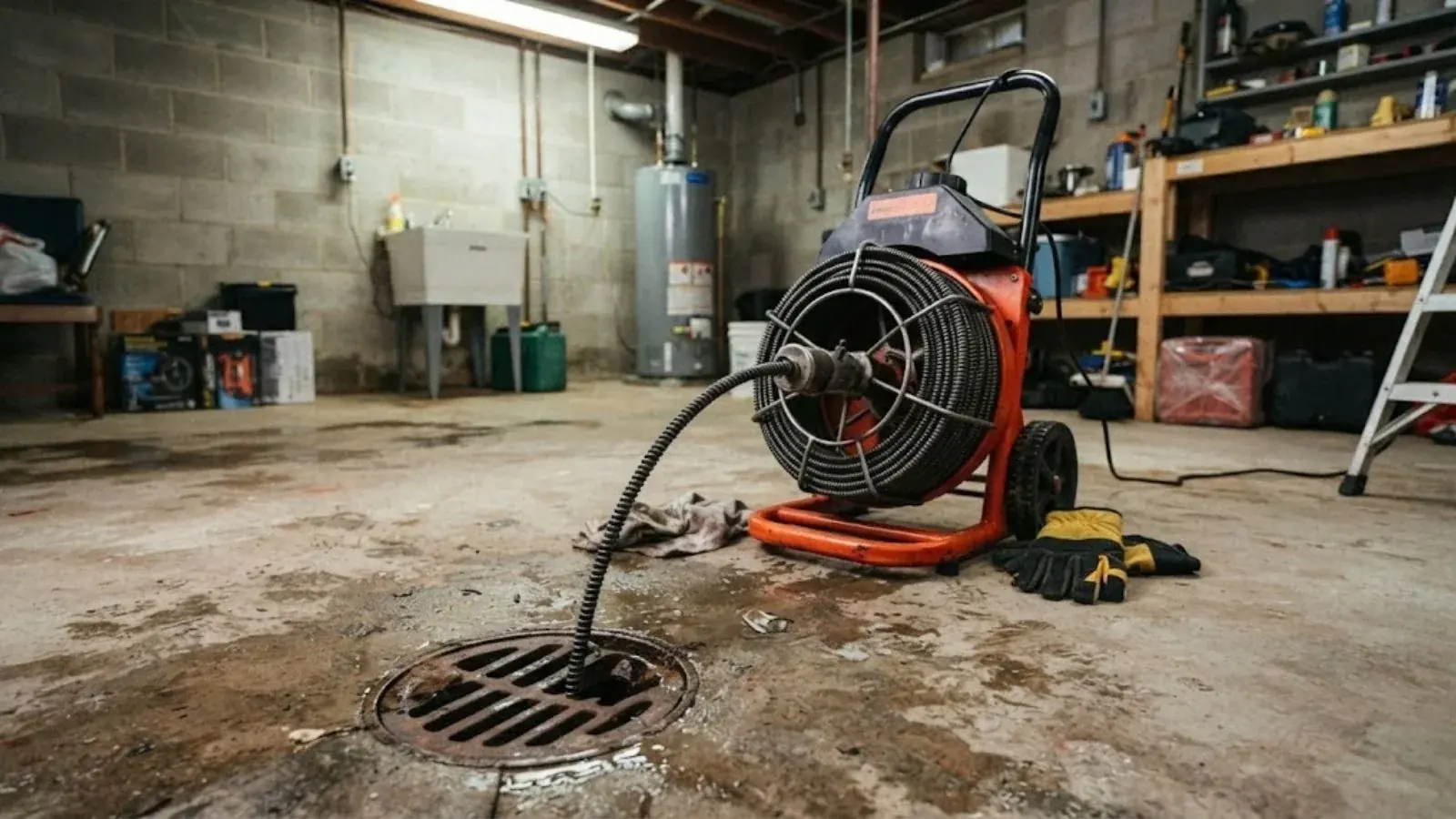
A drum or sink machine feeds a cable with a cutting head through the trap or a cleanout, breaking up grease, hair and soft debris and pulling it back.
Use a jetter for grease and scale
If the cable only punches a hole through the buildup, a water jet scours the pipe wall. Our hydro jetting service covers when that is the right call.
Run a camera when the clog is unclear
If a cable stops at the same spot, comes back with roots, or a previous cable snapped off in the line, a camera shows the pipe itself.
Test the flow before we leave
We run water through the line and check every fixture that was affected, so you leave with a drain that actually runs.
Which method fits which clog
Not every clog needs a machine, and not every clog should get a cable. This table shows the usual match.
| Where it clogs | Usual cause | Method | Camera needed? |
|---|---|---|---|
| Kitchen sink | Grease, food scraps, disposal debris | Sink machine, then a flow test | Only if it returns |
| Shower or tub | Hair and soap scale | Small cable, trap or overflow access | Rarely |
| Washer standpipe | Lint, soap buildup, undersized trap | Cable through the standpipe | If it overflows again |
| Bathroom branch line | Wipes, paper, tree roots outside | Cable from a cleanout or pulled toilet | Often |
| Main line to the street | Roots, grease, a collapsed section | Large cable or jet, then camera | Yes |
If the camera finds a cracked or sagging section, the job moves from cleaning to repair, and our sewer line repair work picks up from there.
Signs the clog is bigger than one fixture
A single slow sink is usually a single clog. These patterns point at something further down the line.
- A toilet gurgles when the washer drainsAir is being pushed backward through the line, which means water is meeting resistance well past the toilet. If only the toilet is slow, see toilet repair in Hallandale.
- Every fixture drains slowly at the same timeThat is rarely a coincidence. It usually means the main line or a large shared branch is partly blocked.
- Water comes up in the tub when you flushThe tub is the lowest opening on many branches, so it shows a downstream blockage first.
- The same drain clogs again within weeksA cleared clog that returns fast usually means buildup or roots remain on the pipe wall, and a camera should look before the next cabling.
- A sewer smell with no visible waterA dry trap, a cracked line or a partial blockage can all let gas up. We check traps first, then the line.
- A blockage after a plumber's snake broke offA broken cable section can snag everything that follows. It needs a camera to locate and the right retrieval tool.
What drives the price of a drain cleaning visit
We do not name a number for a drain we have not seen. A kitchen sink and a main line are different jobs, and you get a clear price before work starts.
Insurance usually does not pay to clear a clog, but it may respond to water damage that a sudden backup caused, and your condo association policy may have its own rules. Ask both. Want your real number? Call the 24/7 line and describe what you see.
While you wait, and what to leave alone
Find your cleanout if you have one, usually a capped pipe outside near the foundation or in a utility closet, but do not open it with water standing in the line. Move rugs and electronics off the floor, and photograph any water that reached the floor with the date for an insurance claim or your association.
Do not pour bleach, acid or drain opener into a stopped line, and do not keep plunging a backup that is coming from the tub. Both can push the problem further or spray contaminated water. If you are just outside Hallandale Beach, we also dispatch to Hollywood, FL and nearby towns.
Questions homeowners ask
Yes. Our line is open around the clock, including nights, weekends and holidays, and we book same-day appointments when available for drains that are not urgent. When water is coming up in a tub or floor drain, say so, and we treat it as an emergency.
We ask you not to. In a line that is fully stopped the liquid just sits, and it can splash onto skin when we open the trap. It also makes it harder to work safely. A plunger on a single sink is fine, but stop if water begins coming up elsewhere.
The two share a line, and that line is blocked below where they join. The water takes the next open path. Stop using both, and we clear the shared branch rather than treating either sink on its own.
A cable opens a hole through a clog but may leave buildup on the pipe wall. If the problem returns within weeks, grease, scale or roots are probably still there. A camera shows which, and a jetter often scours the line more thoroughly than a cable.
It depends on where the blockage is and your association documents. Lines inside your unit are usually yours. Shared stacks and the building's main line are usually the association's. We clear what is clearly yours and document what we find for management.
Yes. Washer lines overflow when lint and soap scale narrow the standpipe or trap. We cable the line from the standpipe, then run the machine through a full drain cycle to confirm it handles the volume.
It happens, and the piece needs to come out because it catches debris. We locate it with a camera and use retrieval tools suited to the pipe. Tell us what happened and roughly where, so we bring the right equipment.
Clearing a clog normally does not involve one, but repair work can. Permit rules vary, so ask the Hallandale Beach Building Division about your address if cleaning turns into pipe replacement.
Sources and official references
The governing standard for plumbing work in Florida is the Florida Building Code, Plumbing (8th Edition, 2023), with the 9th Edition scheduled to take effect December 31, 2026. This page is general information and not a code interpretation, so confirm requirements with the city Building Division.