
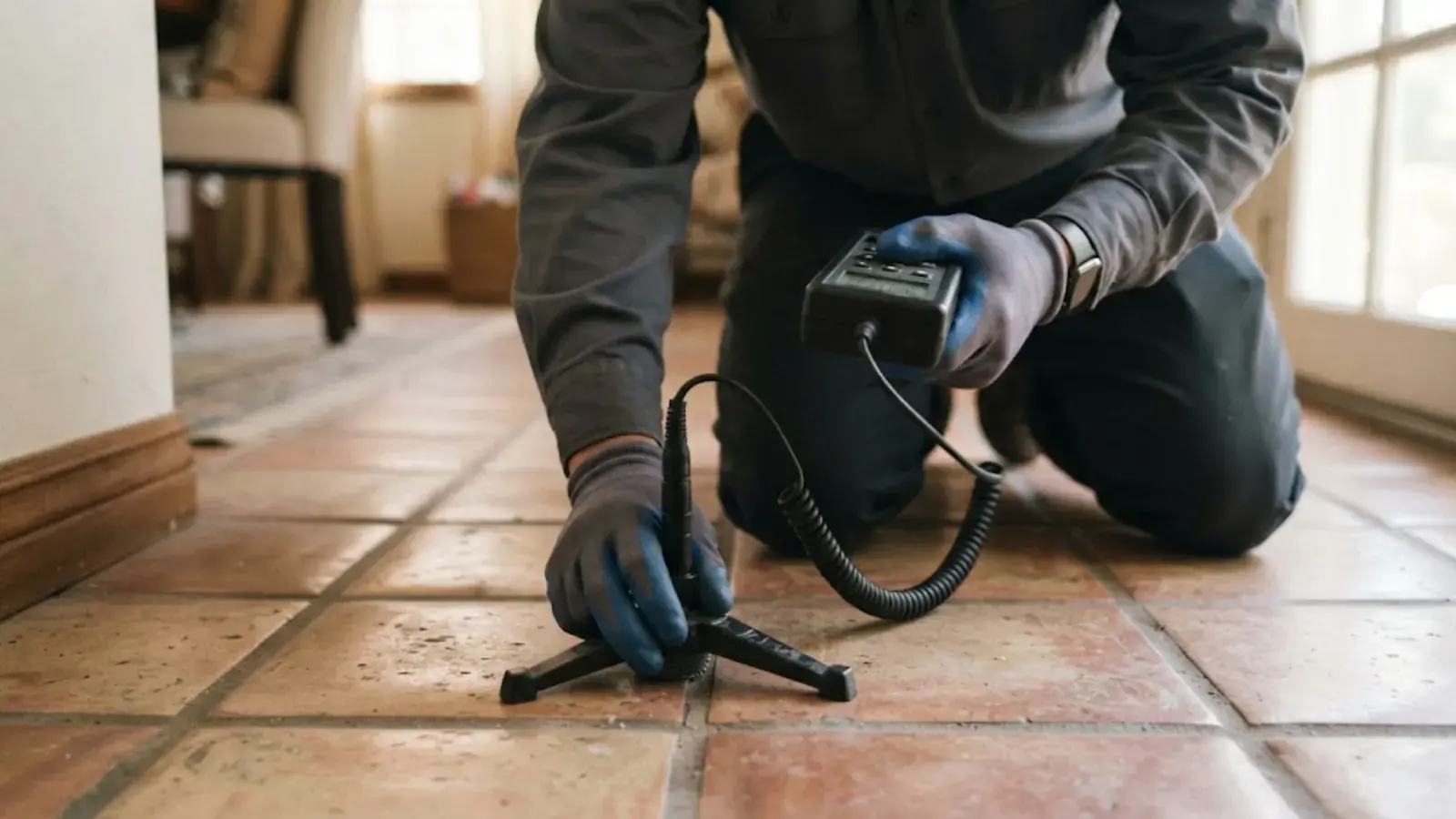
Emergency leak detection in Hallandale starts with one call to our 24/7 line, any hour, any day. If water is on the floor, stop it first: close the main shutoff, usually a valve near the meter or where the supply enters the unit, and keep people clear of wet outlets.
Leak detection means locating a leak without tearing the building apart. We trace the problem with acoustic listening gear, thermal imaging, moisture meters and pressure tests, then tell you exactly where the pipe is failing and what a repair involves.
Most of Hallandale Beach is multi-unit housing. A leak in a high-rise condo or garden apartment can reach a neighbor's ceiling within hours, so a fast, precise answer matters more here than almost anywhere in Broward County.
Signs of a hidden leak in a Hallandale home or condo
Slow leaks rarely announce themselves. These are the signals we hear about most often from callers, and any one of them is worth a call.
- A water bill that jumps with no change in habitsCheck your meter with every fixture off. If the leak indicator or the dial keeps moving, water is escaping somewhere on your side of the meter.
- Warm spots or damp patches on a slab floorA hot water line leaking under a slab can warm the tile above it. Bare feet often find it before the eyes do.
- Stains, bubbling paint or a musty smell on a ceiling or wallCondo ceilings often show the leak from the unit above. Photograph it and note the date before you call.
- The sound of running water in a quiet buildingHissing or trickling at night, with every tap closed, usually means a pressurized line is leaking inside a wall.
- Low water pressure at one or more fixturesA leak ahead of the fixture steals pressure. Pressure that drops over days points to a growing leak, not a clogged aerator.
If the meter is spinning and you cannot find standing water, the leak is hidden. That is exactly the situation our equipment is built for.
When a leak is an emergency
Some leaks can wait for a morning appointment. These cannot, and a call to the 24/7 line is the right move right now.
Water is spreading toward electrical
Shut off power to the wet area at the breaker, but only if you can reach the panel without stepping in water.
The ceiling below is sagging
Water pooling above drywall adds weight fast. Move belongings out from under it and keep everyone clear of the area until we arrive.
The meter runs with everything off
Close the main shutoff. If the meter stops, the leak is inside the building. If it keeps running, call us and the utility.
A neighbor reports water coming through
In a condo, tell building management and call us. Fast isolation limits damage and the paperwork that follows.
How we find a leak without opening the wall
The goal is a precise location, not a guess. Our process moves from the least invasive test to the most.
Isolate and pressure test
We shut sections of the system and watch gauge pressure to learn which line is losing water, hot or cold, supply or drain.
Listen with acoustic equipment
Ground microphones and pipe sensors pick up the sound of escaping water, which narrows a slab or wall leak to a few feet.
Scan with thermal imaging
A thermal camera shows temperature differences from a hot line leak or evaporating moisture behind a finish.
Confirm with moisture readings
A moisture meter confirms wet materials before any cutting begins, so the opening is as small as it can be.
For leaks in the slab itself, see our guide to slab leak repair in Hallandale. For a line that has already split, burst pipe repair is the faster path.
Why leaks hide in Hallandale Beach housing
Census data puts the median home here at 1975 construction, and about 70 percent of housing units sit in buildings of 20 or more units. That mix means older supply lines, shared walls and stacked risers, where one failing joint can wet several units.
Slab foundations are common across South Florida, so many supply lines run through or beneath concrete. When a line there starts weeping, it can run for months before it shows. If your bill is rising and your floors feel warm, a slab leak is a likely suspect.
Water quality and pipe wear
The city draws groundwater from the Biscayne Aquifer and disinfects with chloramines, according to its 2025 water quality report. The city softens its water at the plant, but its published reports do not list a hardness figure, so we do not guess one. If you want to know what is in your tap, ask the Utilities Division for the current report.
Which side of the meter is the problem
The City of Hallandale Beach Utilities Division maintains the system up to the meter. Its guidance is that a meter that keeps running after the water is shut off points to a break on the customer's side, and that is where a plumber is needed.
Leak detection or repair: how the options compare
Once the leak is located, the fix depends on where it is. This table shows how the common cases usually play out.
| Where the leak is | How we confirm it | Typical fix | Disruption |
|---|---|---|---|
| Supply line in a wall | Acoustic sensor and moisture meter | Small drywall opening, repair or replace the section | Low |
| Line under a slab | Pressure test, listening gear, thermal scan | Spot repair, reroute overhead, or repipe | Medium to high |
| Water heater connection | Visual check and moisture reading | Replace fitting or supply line | Low |
| Irrigation or yard line | Pressure test and meter check | Dig and repair the failed fitting | Low to medium |
| Drain line | Camera inspection | Spot repair or pipe replacement | Medium |
If the camera shows a drain problem rather than a supply leak, our sewer inspection service covers the full run to the street.
What affects the cost of leak detection
We do not quote a price over the phone for a problem we have not seen, and we do not pad a detection visit. The factors below decide the final number, and you hear it before work begins.
Homeowner policies often cover sudden pipe breaks and the resulting damage, but not slow leaks over time. Ask your insurer or condo association what applies to you. Want your real number? Call the 24/7 line.
What to do before the plumber arrives
Close the main shutoff and open the lowest faucet to drain pressure. Move furniture and electronics out of the wet area, and photograph every stain or damp spot with the date. Those photos help with an insurance claim or a request to a neighbor or association.
Do not cut into walls or lift tile yourself. A precise location from our equipment usually means a much smaller opening than a guess does.
Questions homeowners ask
Yes. Our line is open 24 hours a day, every day, and we take leak calls at night, on weekends and on holidays. Close the main shutoff while you wait and tell us what you can see.
Turn off every fixture and appliance, then check the meter. If the leak indicator or dial keeps moving, water is escaping. A bill that rose with a guest, a new irrigation schedule or a filled pool can be real use, so rule those out first.
Usually, yes. Listening gear and thermal imaging narrow the location to a small area before anyone cuts. We open the floor only once the spot is confirmed, and only as much as the repair needs.
It depends on where the leak is and what your association documents say. Pipes inside your unit are usually yours, while shared risers and stacks are usually the association's. We locate and document the leak, and you take that to management.
That is the goal. We pinpoint the section of pipe, explain what failed, and describe repair choices before work starts. Some old lines are better replaced than patched, and we tell you when that is the case.
Shut off the main valve at your building. If the meter stops, the leak is on your side and we can trace it. If it keeps running with the main closed, contact the City of Hallandale Beach Public Works at (954) 457-1616 and ask about the meter.
Yes. Many leaks can be fixed on the same visit. When the repair needs a permit, we tell you, and permit rules vary, so we point you to the Hallandale Beach Building Division for what applies to your address.
Sources and official references
The governing standard for plumbing work in Florida is the Florida Building Code, Plumbing (8th Edition, 2023), with the 9th Edition scheduled to take effect December 31, 2026. This page is general information and not a code interpretation, so confirm requirements with the city Building Division.