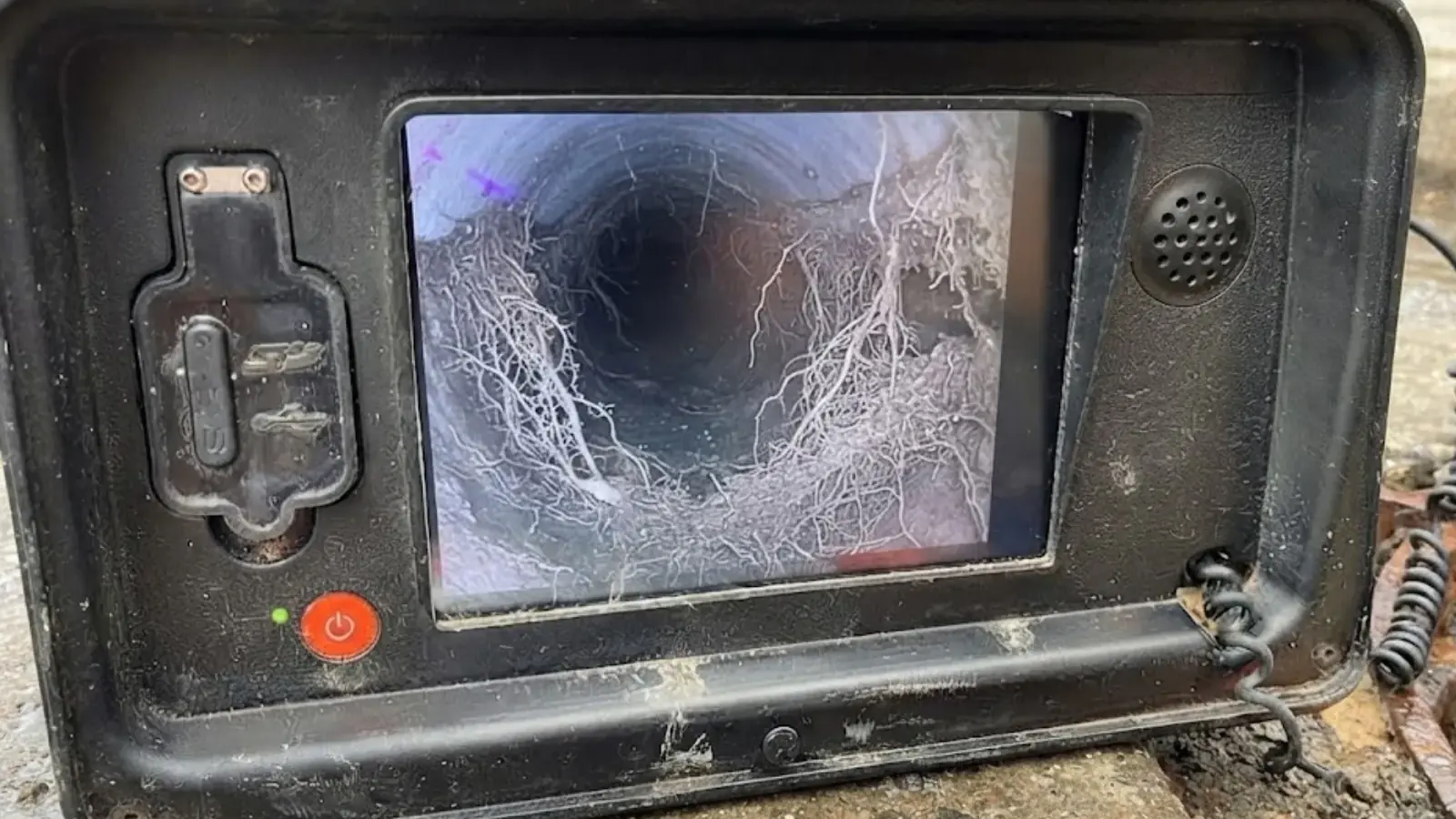
Sewer inspection in Hallandale means running a small waterproof camera through your drain line to see its real condition. You get video of the pipe, a marked location for anything wrong and a plain explanation of what it means. It is a planned visit, though our line is open 24/7 if you want to book or ask a question.
People book an inspection for a few common reasons. They are buying or selling a condo or house and want to know what the line looks like. They have had a backup that keeps returning. Or they have an older building and want to know what is inside before something fails.
A camera does not clean or repair anything. It answers the question that decides what to do next, which is why it usually comes before any larger sewer work.
What the camera shows and what to do with it
Each thing the camera can find leads to a different decision. This table shows the common findings.
| What the camera shows | What it usually means | Typical next step |
|---|---|---|
| Clean, open pipe with smooth flow | The line is in decent shape | Keep the video on file |
| Grease or scale coating the walls | Buildup that can narrow the line | Cleaning or jetting |
| Roots entering at a joint | An opening where the pipe has separated | Clear roots, then plan a repair |
| A low spot holding water (a belly) | A sag where debris collects | Monitor or repair depending on severity |
| Cracked, offset or collapsed pipe | Physical damage | Repair by lining or digging |
| Foreign objects or a broken cable piece | A blockage source in the line | Retrieve and recheck |
If the footage shows roots or buildup, our sewer line cleaning service clears it. If it shows damage, sewer line repair lays out the options.
Good reasons to book an inspection
You do not need a backup to justify a camera. These are the situations where it earns its place.
- You are buying a condo or houseA line you cannot see is a risk you cannot price. Video of the pipe before closing shows problems while you can still ask about them.
- You are selling and want to know what a buyer's inspector will findSeeing the line first lets you fix or disclose a problem on your timeline, not during a rushed negotiation.
- Backups keep returning after cleaningA repeat problem usually has a cause the cable does not show. The camera shows whether it is roots, a sag or a crack.
- Drains are slow across the whole unit or buildingSeveral slow fixtures suggest a line-wide problem. Video shows which part of the run is restricted.
- An old building with no pipe recordsManagement can document pipe type and condition now instead of discovering it during a failure.
- A repair was done and you want proof it workedA post-repair video confirms the line runs full bore and shows the repaired section.
Hallandale Beach buildings and why a line may need a look
Census data puts the median home here at 1975 construction, and about 70 percent of housing units are in buildings with 20 or more units. In buildings of that era across the country, cast iron stacks and clay or cast iron lines are common, though we do not claim to know what a given building has until the camera or records show it. For a buyer, that is a reason to ask what the line looks like.
In a condo, the line that matters may be the building's stack or lateral, which the association controls. If you are buying, ask management what has been done and whether any camera work is on file. We can inspect the line serving your unit and note what we can and cannot see from its access points.
Where the camera stops
The City of Hallandale Beach Utilities Division runs sewer collection with 16 lift stations and 72 miles of sewer lines and force mains, with flow treated at Hollywood's regional facility. Our inspection covers the private line from the access point toward the street connection. The city's page does not mark where its responsibility ends, so ask the Utilities Division for that line.
Permits and disclosure
If the camera finds damage, repair work may need a permit, and permit rules vary, so ask the Hallandale Beach Building Division. For a sale, ask your agent or attorney how a camera finding affects disclosure. We provide the video, not legal advice.
How a sewer camera inspection works
A visit is short on mess and long on detail. Here is what happens.
Find the access point
We use a cleanout when there is one. If not, we may pull a toilet or use another access, which we explain before starting.
Run the camera through the line
A waterproof camera head on a flexible push cable travels the pipe and sends live video to a monitor. We note distance as it goes.
Locate and mark findings
A transmitter in the camera lets us trace its position above ground, so a defect can be marked at the right spot and depth.
Review the video with you
We stop at each finding and explain what you are looking at, including whether it matters now or can be watched.
Deliver the record
You get the footage and our notes, which help with a sale, an association request or a repair plan.
Planning your visit
Tell us whether the unit is occupied, where the cleanout is if you know, and whether there has been a recent backup. If the line is currently stopped, tell us, because a stopped line has to be cleared before a camera can see anything.
For a sale or purchase, book early so a finding does not land at the last minute. For a condo, let management know a camera visit is planned if the building asks for notice.
What affects the price of a sewer inspection
We give you a clear price before work starts. The inspection price depends on the situation, so a number over the phone for a line we have not seen would be a guess.
Insurance generally does not pay for an inspection, though some lenders or buyers ask for one. Check with your agent or association. Want your real number? Call the 24/7 line and tell us about the property.
Before the visit and after the footage
Keep the video and notes. If you are selling, share them with your agent, and if you own a condo, send them to management. If a repair follows, they let a second contractor see the same pipe.
If you are near the county line, our crews also cover Hollywood, FL and surrounding towns.
Questions homeowners ask
It depends on the length and access of the line. A simple lateral with a good cleanout is usually done in a single short visit, while a long or hard-to-reach line takes more time. We tell you what to expect when you book.
It is a sensible step for an older unit, especially if the building has had backups or you cannot see its records. Also ask management what camera work or repairs exist for the stack and shared lines.
We can inspect the part we can reach from the access points that serve your unit. Shared stacks and building laterals are controlled by the association, so we note what we saw and where the access stops.
A blockage or collapse can stop it. We note where, how far in, and what we could see. If the pipe is blocked, we may clear it and run the camera again.
Yes. You receive the footage and our notes so you can share them with an agent, a lender, an association or another contractor.
Often the camera shows enough to identify the material, such as cast iron, clay or plastic. It does not show age. We describe what we see and do not guess beyond it.
Yes. A video after the work shows the line runs full bore and that a repaired section is sound. It is a good record to keep.
Sources and official references
The governing standard for plumbing work in Florida is the Florida Building Code, Plumbing (8th Edition, 2023), with the 9th Edition scheduled to take effect December 31, 2026. This page is general information and not a code interpretation, so confirm requirements with the city Building Division.