
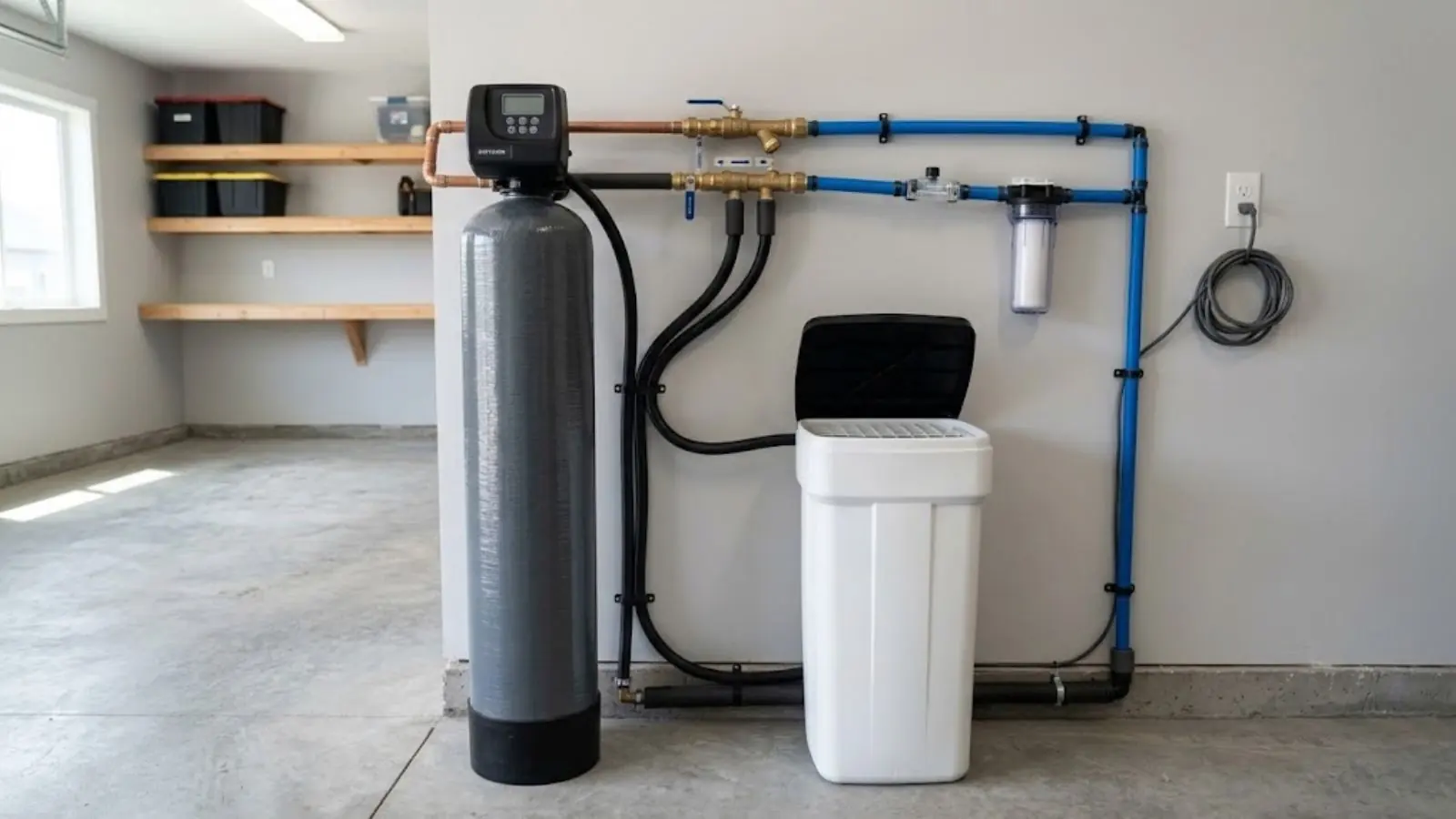
Water softener and filtration work in Hallandale covers installing a new system, repairing one that stopped regenerating, replacing a failed valve, and adding a filter for taste, odor or sediment. Our licensed plumbers do the plumbing, and we are open 24/7 if a leaking tank or valve cannot wait.
Decide what problem you are solving before you buy anything. The plant treatment is the city's job, and the reports it publishes list no hardness figure, so we do not guess one. A simple test at your tap tells you more than a brochure does.
This page explains how to test, when a softener, a filter or both make sense, and what keeps the system working.
Signs your water may need treatment
Water problems show up in the home before they show up on a report. These are the signs people usually notice first.
- White crust on faucets and showerheadsMineral scale builds where water dries. It is a common sign of hard water, though a test tells you how much.
- Spots on glasses and dishesMinerals left behind as water evaporates leave a film that rinse aids only partly hide.
- Soap that does not lather and skin that feels dryMinerals interfere with soap. A softener often changes that, but a filter will not.
- A chlorine or chloramine taste or smellThe city disinfects with chloramines, so some taste is normal. A carbon filter at the kitchen tap can help. A softener does not change it.
- Reduced flow at fixtures and appliancesScale narrows pipes and coats heating elements, so water heaters and fixtures work harder over time.
- A softener or conditioner that no longer works as it shouldIf the salt level is fine and the water still tests hard, the valve, the control head or the regeneration line may have failed.
What we know about Hallandale Beach water, and what we do not
The water comes out of wells roughly 100 feet deep in the Biscayne Aquifer and goes through a treatment plant that runs around the clock. The city softens its water at the plant, which means the water reaching your tap has already been through softening. Its published reports, though, do not list a hardness figure, so we will not give you a number. Test your own tap before you buy equipment.
For disinfection the city uses chloramines. Its 2025 report gives an average of 2.646 ppm, within the 4.0 ppm limit. It also stopped adding fluoride on July 1, 2025. What that means for you: taste and odor questions are about disinfectant, which filters address, and mineral questions need a hardness test.
How to get a real answer
Buy a hardness test kit or have a water treatment dealer test a sample. Then request the latest annual water quality report from the city's Utilities Division and compare. If your result differs from what you expected, test again from a cold tap that has run for a minute.
Condos and shared plumbing
In a building with shared supply, a whole-unit softener may need the association's approval, and in some buildings it is not practical. A point-of-use filter at the kitchen tap or shower is often an easier first step.
Softener, filter or both: how the options compare
The right equipment depends on the problem. A softener and a filter do different jobs, and one does not replace the other.
| Problem | Softener | Carbon filter | Sediment filter |
|---|---|---|---|
| Mineral scale and spotting | Addresses it | Does not | Does not |
| Chlorine or chloramine taste and odor | Does not | Helps | Does not |
| Visible grit or particles | Does not | Partly | Helps |
| Dry skin and poor lather | Often helps | Does not | Does not |
| Drinking water at one tap only | Not usually the choice | Under-sink option | Optional pre-filter |
| Whole-home protection of appliances | Helps if water is hard | Whole-house carbon option | Pre-filter on main |
Some homes use a softener and a carbon filter together. Some need only one. We help you choose after you have a test result.
If your softener or tank is leaking or overflowing
A softener that overflows or a tank with a broken valve can flood a utility room in a short time. Turn the bypass valve to bypass if you can, close the supply to the unit, unplug it only if the cord and outlet are dry, and call. We handle leaks and failed valves, and our 24/7 line is open for water you cannot stop.
If the water is coming from a supply line and not the unit, finding the leak comes first, and a split pipe falls under burst pipe work.
How installation and service are done
Water treatment is plumbing first and equipment second. The order below keeps the install clean and the system serviceable.
Test and size
We review your test result, the household size and the supply, and size the system to match.
Plan the location
A softener needs a drain, a power outlet nearby and space for salt. We choose a spot that you can reach for refills.
Install bypass and connections
We install the unit with a bypass valve, so the water can be isolated for service, and connect supply and drain lines.
Set the control head
We program regeneration and check that the unit cycles and drains properly.
Test the water and the connections
We check for leaks and confirm the water at the tap with a test.
Explain the maintenance
We show you how to add salt, how to bypass the unit and what to watch for.
If the water heater is next to the new unit, our water heater repair team can check how scale has affected it.
Backflow testing: a short guide
A backflow preventer is a device, often on an irrigation line or a commercial supply, that stops water from flowing backward into the drinking supply. Many property owners learn about them when a water provider sends a notice asking for a test.
Whether a test is needed, how often and who may do it are set by your water provider, so put that question to the Utilities Division for your address. If a notice asks for testing, call us and we help with the plumbing side, including repair of the device if it fails.
What decides the cost of water treatment work
Equipment cannot be priced from a phone call, since the right choice depends on your water and your space. After a visit, the price is stated clearly before work starts.
Equipment is rarely an insurance matter, though sudden water damage from a failed tank or valve may be. Ask your insurer. When you want the actual number, call the 24/7 line.
Keeping a softener or filter working
Check salt every month or two and keep the level above the water line in the brine tank. Replace filter cartridges on the maker's schedule. If the water starts to feel hard again, listen for the regeneration cycle and check the drain line for kinks. A unit that never cycles needs service, and that is a good time to call. If you also have a new fixture planned, see plumbing installation.
Questions homeowners ask
No number is available to us. The city says it softens at the plant, yet the reports it publishes carry no hardness figure. Test your tap with a kit and read the Utilities Division report beside the result.
Not automatically. The best way to know is a hardness test at your tap. If the result is low and you only want better taste, a carbon filter may be the better purchase.
No. A softener addresses minerals. The chloramine the city uses as a disinfectant is addressed by a carbon filter, either at one tap or on the whole house.
Often yes. Common causes are a failed valve or control head, a blocked drain line or a damaged regeneration line. We check before suggesting a replacement.
Yes. An under-sink system gives drinking water at one tap, and we plumb the supply and drain connections.
We handle the plumbing side of backflow devices, including repair. Whether a test applies to you, and who may perform it, is a question for the city's Utilities Division.
Often, depending on your association and the unit layout. Ask management first. If a whole-unit system is not allowed, a filter at the kitchen tap is a workable fallback.
Sources and official references
The governing standard for plumbing work in Florida is the Florida Building Code, Plumbing (8th Edition, 2023), with the 9th Edition scheduled to take effect December 31, 2026. This page is general information and not a code interpretation, so confirm requirements with the city Building Division.