A clogged sewer line shows itself in several fixtures at once: a toilet that gurgles when the shower drains, a tub that backs up when you flush, or water rising at the lowest drain in the building. If you see that pattern, stop running water and call a plumber. The blockage is in the main line, and more water only pushes it back toward your floor.
A homeowner can safely check for the pattern, find the cleanout, and hold off on water use. Cleaning the main line itself, with a cable machine or a hydro jetter, is plumber work.
This guide explains the signs, what to do while you wait, the difference between the two cleaning methods, and who owns which section of pipe in a house versus a condo.
Signs the main line is blocked
A single slow sink is a fixture problem. These signals point farther down the line.
- More than one drain is slow at the same timeIf the shower, the toilet and the washing machine drain all misbehave together, they share the blocked pipe.
- Gurgling from a drain when another fixture runsAir pushed ahead of the water has nowhere to go and bubbles up at the nearest open trap.
- Water backing up at the lowest drainA floor drain, a ground-level shower or a tub is where a backup shows first, because it sits lowest on the line.
- A toilet that bubbles or rises when you run the washing machineThe washer's discharge hits the blockage and comes back up a different opening.
- Sewage smell inside or outside near a cleanoutA sour or rotten odor at a drain or cleanout can mean the line is partly blocked.
If you see sewage coming up in the home, treat it as a health issue. Keep children and pets out, shut off water use, and call. Our sewer line cleaning service answers around the clock.
Find the cleanout, and what to do with it
The cleanout is a capped pipe that gives access to the main line. In a house, it is often outside near the foundation or inside a garage or utility space.
Look for a capped pipe
It is usually about 3 to 4 inches wide, at or near ground level, with a threaded cap. In a condo, there may be none inside your unit.
Check whether it is full
Do not open it if you suspect a backup. A full line can send water out when the cap comes off. A plumber opens it with a tub or bucket ready.
Do not run a hose or auger into it yourself
Rental augers can damage pipe and injure people. Leave this part to someone with the right equipment and training.
Mark the spot for the plumber
Tell us where it is. That saves time when we arrive, and it shows whether the blockage sits before or after the cleanout.
We take these calls from Aventura sewer backups to Pembroke Park drain calls, all dispatched from Hallandale Beach.
What you can do safely, and when to stop
Stop using water as soon as you suspect a main line clog. That means no flushing, no showers, no laundry and no dishwasher. Every gallon you add goes into a line that cannot drain. Tell everyone in the home to hold off too.
You can plunge a single toilet or sink to rule out a local clog. If plunging does nothing and other fixtures are also slow, stop. Do not pour chemical drain cleaners into a main line. They rarely clear a full blockage, and they leave a hazard for the plumber who has to work in that water.
Stop and call if
Sewage is on the floor, water is rising in a tub or shower, you smell strong sewer gas, or two or more fixtures are affected. Also stop if you are in a condo and the problem could involve a neighbor. Then call us and your property manager.
Cable machine or hydro jetting
Both methods clear a blockage, but they work differently. A plumber chooses based on what the clog is made of and what the pipe looks like.
| Method | How it works | Best for | Watch for |
|---|---|---|---|
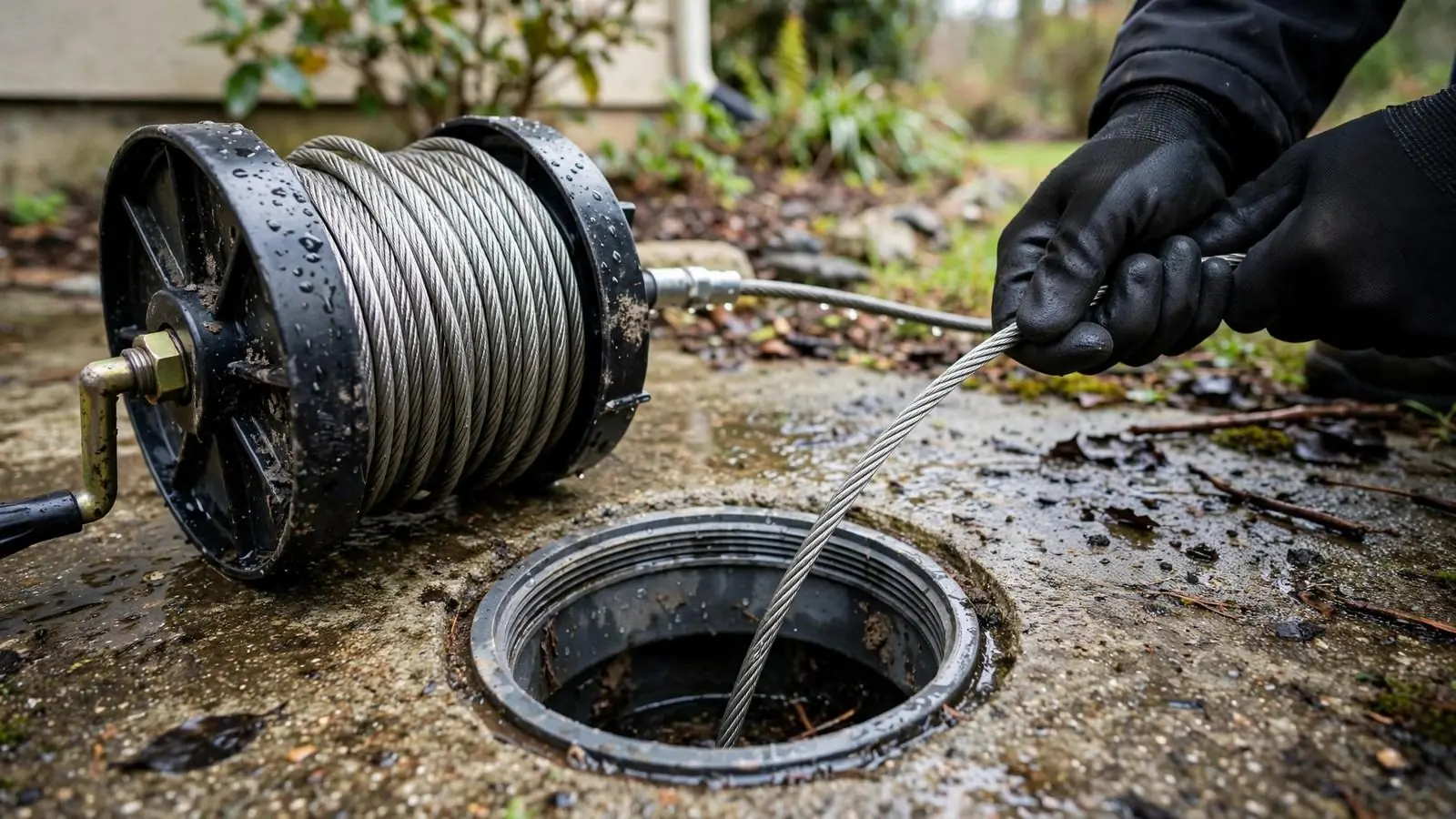
| Cable (auger) machine | A rotating steel cable breaks through or pulls out the blockage | Soft clogs, paper, a single stoppage | Leaves some residue on the pipe wall |
| Hydro jetting | A hose with a nozzle blasts high-pressure water to scour the pipe | Grease, scale and roots in a full line | Weak or broken pipe may not tolerate pressure |
| Camera inspection | A small camera shows the line from inside | Repeat clogs, unknown cause | Adds a step, but shows the real problem |
| Spot repair or replacement | A damaged section is dug or relined | Collapsed or offset pipe | Larger job, scheduling and permits |
For more about the pressure option, see our hydro jetting service. When the cause is unknown or the clog keeps coming back, a camera look through our sewer inspection service shows what is happening before anyone picks a method.
Who owns the pipe: private lateral or condo shared stack
In a house, the private lateral runs from the building to the point where it joins the public sewer. The homeowner is usually responsible for the part on their property, and the city or county for the public main. Ask your utility where that line is drawn for your address.
In a condo, the stack is the vertical pipe that serves several units, and the horizontal main below it belongs to the association in most buildings. Your unit's branch lines are typically yours. If more than one unit backs up, call management first, and ask for the written split of responsibility.
How Hallandale Beach's sewer system fits in
According to the city's Utilities Division page, its sewer collection system has 16 lift stations and 72 miles of sewer lines and force mains. A Broward County sea-level report for the city notes there are no wastewater treatment plants within city limits, and the city page says wastewater goes to the City of Hollywood's regional treatment facility.
In practical terms, the public system is pumped and piped across a lot of ground, and the private line from your building feeds into it. Census figures show roughly 70 percent of Hallandale Beach units are in buildings with 20 or more units.
That makes the shared stack question common here. If your backup appears in several units, ask management to check the building stack and call the city only if the public main looks involved. The city page lists no dedicated sewer backup line, so start with management or a plumber.
What affects the cost of cleaning a main line
Several factors decide the price: how far down the line the blockage sits, whether a cleanout is accessible, which method is needed, whether a camera inspection is added, and what time of day you call. A clog caused by roots or a damaged section can need repair on top of cleaning.
Insurance and association rules matter as well, so ask your insurer or management what applies. If you want a real number, call our 24/7 line. A licensed plumber describes the work and gives a clear price before work starts.
Questions homeowners ask
Look for several symptoms together, such as multiple slow drains, gurgling from a toilet or tub when another fixture runs, or backup at the lowest drain. A single slow sink points to a local clog.
A plunger works for a single toilet or sink. For a main line, DIY tools rarely reach the clog, and they can damage pipes. Stop water use and call a plumber.
It depends on the pipe's condition. A camera look beforehand shows whether the line can handle the pressure. A plumber can choose a cable or lower-pressure option for fragile lines.
The shared stack and main line below are usually the association's, and your unit's branch lines are usually yours. Check your declaration and ask management who owns which pipe.
The washer's discharge hits a partial blockage in the main line, and air or water is pushed up the next open drain. It is an early sign of a main line clog.
The city runs the public sewer collection system. A blockage in your private line is generally the owner's to fix. Ask the Utilities Division where the line between public and private sits for your address.
Sources and official references
The governing standard for plumbing work in Florida is the Florida Building Code, Plumbing (8th Edition, 2023), with the 9th Edition scheduled to take effect December 31, 2026. This page is general information and not a code interpretation, so confirm requirements with the city Building Division.