A dip tube is the pipe inside a tank water heater that carries incoming cold water down to the bottom of the tank. When it cracks or breaks off, the cold water spills in near the top and mixes with the hot. The result is lukewarm water at every tap, even though the burner or element is working. Replacing the tube is usually a small repair, as long as the tank around it is still in good shape.
This guide covers the symptoms, the general steps with the safety rules that come first, and how to decide between fixing and replacing the heater. If you would rather hand it off, our team that handles water heater repairs covers dip tubes along with thermostats, elements and leaking fittings.
What the dip tube does inside the tank
Hot water rises and cold water sinks, and a tank heater depends on that. The cold inlet sits at the top of the tank, so a long tube carries the incoming water to the bottom, where the burner or the lower element heats it. The hot water collects at the top and leaves through the hot outlet, ready for your faucets.
If the tube is gone, incoming cold water lands right next to the hot outlet. You still draw some hot water, but it is diluted, and the tank can never build a clean hot layer. Many dip tubes are plastic, and plastic can turn brittle and snap with age and heat. Pieces of it sometimes show up as small white or tan flakes in faucet aerators and showerheads.
Signs the dip tube is the likely culprit
No single sign proves it, but a combination of these points toward the tube. Each one is worth noting before you call anyone.
- Water that is warm but never properly hotThe heater runs and the tank feels warm to the touch, yet showers top out at lukewarm. A dead element or bad thermostat usually gives you cold or intermittently hot water instead.
- Hot water that runs out far sooner than it used toA tube that has broken partway down keeps mixing cold water into the top of the tank, so the useful hot supply shrinks.
- Small plastic bits in aerators or showerheadsUnscrew the aerator on a bathroom faucet and look for flakes or tiny curls. Plastic debris is a strong hint that the tube is breaking down.
- A tank that is not especially old but seems to be strugglingTube failure does not depend on a rusted tank, so a heater with a healthy shell can still have this problem.
- The gas burner or electric element cycling more often than usualWhen the heater keeps trying to bring the top of the tank up to temperature, it may run longer or more often. Treat this as a clue, not proof.
Condo owners should check one more thing before blaming the heater: whether the shower or tub valve itself is mixing cold into the hot side. A worn mixing cartridge can mimic a dip tube problem at that one fixture only.
Lukewarm water: dip tube or something else
Several different faults produce weak hot water, and the cheapest fix is the one that matches the real cause. This table is a way to sort them before any parts are bought.
| What you notice | Likely cause | First thing to check | Who handles it |
|---|---|---|---|
| Lukewarm at every tap, plastic flakes in aerators | Broken dip tube | Aerators and the cold inlet at the top of the tank | Plumber or confident DIYer |
| Hot at first, then cold fast, electric heater | Failed lower element | Breaker, then element testing with the power off | Plumber or licensed electrician |
| Pilot or burner keeps going out, gas heater | Thermocouple or gas control problem | Do not troubleshoot a gas smell yourself, leave and call 911 | Plumber |
| Hot at the heater, lukewarm at one shower only | Worn mixing cartridge at the fixture | Compare hot water at a different faucet | Plumber |
| Rumbling noises, shrinking hot supply | Sediment in the tank | Age of tank and last flush | Plumber |
| Wet floor or rust at the base of the tank | Failing tank | Leak source, shutoff valve, then replacement options | Plumber |
If the table points at the tank, a water heater replacement conversation is usually more useful than another small repair.
The general replacement process, safety steps first
These are the steps in outline, not a full manual. Heaters differ, and the first four exist to keep you from getting burned, shocked or flooded. If any step feels uncertain, stop there and call a plumber.
Turn off the energy source
For an electric heater, switch off its breaker and confirm the power is off. For a gas heater, turn the gas control to its off setting. If you smell gas at any point, leave the building, call 911 from outside, then call your gas utility before you call a plumber.
Shut off the cold water to the tank
Close the cold inlet valve above the heater. Open a hot faucet somewhere in the home so the lines can vent while the tank drains.
Let the water cool, then drain the tank
Water inside can scald, so give it time. Attach a hose to the drain valve, run it to a safe drain or outdoors, and open the valve. Leave the pressure relief valve and its discharge pipe alone. Never cap, plug or remove them.
Disconnect the cold inlet and remove the old tube
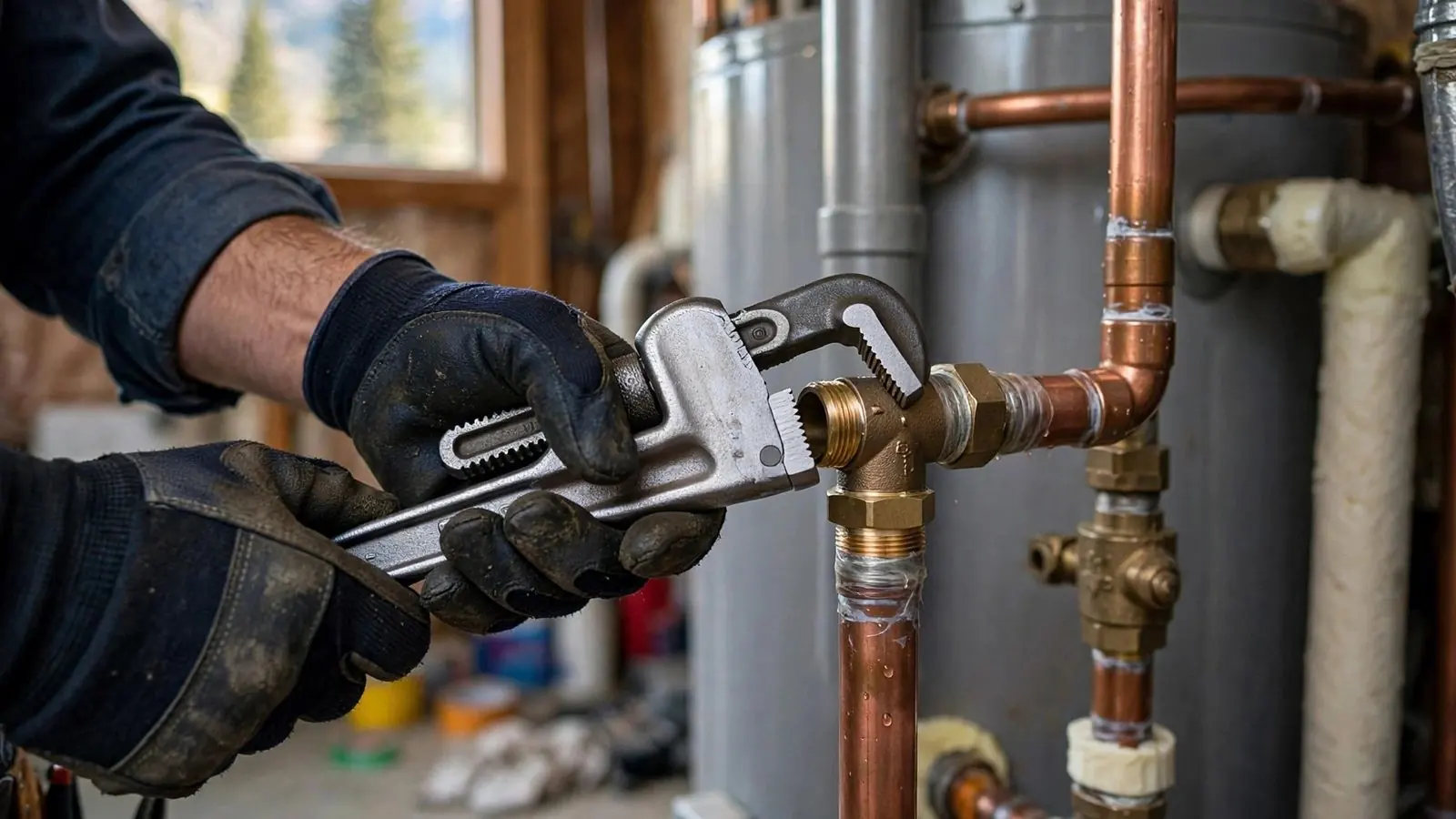
Loosen the cold inlet connection and pull the tube out of the tank opening. Some tubes are part of the inlet fitting, others slide into it. Compare the old one and the new one for length and fit.
Install the new tube and reconnect
Seat the new tube fully, use fresh thread sealant or tape on the fitting as the part calls for, and tighten without forcing. A seized or corroded fitting is a reason to stop, not to push harder.
Refill before restoring power
Open the cold inlet and keep the hot faucet open until water runs steadily with no air spitting. Only then restore the breaker or relight the gas. Turning an electric element on in a tank that is not full can destroy the element in moments.
When to stop and call a plumber
Stop if you smell gas, if the inlet valve will not close, if fittings are crusted or rusted tight, or if the tank is leaking from anywhere other than the drain valve. Stop too if you cannot safely reach the heater, which is common in tight condo closets and attic platforms.
A plumber can also tell you whether the tank is worth saving before you spend a weekend on a part. That judgment is most of the value of a service call, and you can make it on the same visit through our plumbing installation team if the answer is a new heater.
Tank age, and whether to repair or replace
Tank water heaters are generally built to last about eight to twelve years, and some run longer. The serial number on the data plate usually encodes the manufacture date, and the manufacturer can tell you how to read it. A dip tube replacement on a heater in its first half of life is usually a sensible repair.
On an older tank, the math changes. The tube may be fine in an hour, but the tank bottom is likely holding sediment, the anode rod is probably spent, and the next failure could be the shell itself. A leak from the tank body cannot be repaired. That is the point where replacement stops being optional.
Repair makes sense when
The tank is in its first half of life, dry at the base, free of rust streaks, and the only symptom is lukewarm water with debris in the aerators. A new tube is a small cost next to a new heater.
Replace makes sense when
The tank is past a decade, shows rust or moisture at the base, rumbles loudly, or has needed several repairs already. Spending money on a tube in a failing tank is how people end up paying twice.
Water heater paperwork and city water in Hallandale Beach
On its applications and forms page, the city lists a Water Heater Replacement Data Form, which sits alongside the Broward County building permit application. The form asks for the specs of the old and new unit and the electrical or gas details. A dip tube swap is not a replacement, but if your inspection ends with a new tank, expect that paperwork to follow.
So take a photo of the data plate on your heater now, before anyone starts work. Whether a permit applies is a question for the city, so call the Hallandale Beach Building Division with your address and the work planned, and check whether a condo association must approve it first. The city's own Building Division page lists its hours, and City Hall is closed on Fridays.
Where we dispatch for heater problems
Our crews work out of Hallandale Beach, and the same lukewarm-water calls come in from neighboring communities. If you are across the county line, see our page for plumbers serving Aventura. For homes just north of us, Hollywood plumbing service covers the same ground.
Call the 24/7 line if the water coming out is scalding, the tank is leaking, or you smell gas. Those are not lukewarm-water problems, and they should not wait for an appointment.
Questions homeowners ask
There is no fixed number. Plastic tubes can become brittle after years of heat, and a tube in an older tank is more likely to be the cause of lukewarm water. A tube that lasts as long as the tank is common, and one that fails early is not unheard of.
You can, but it is rarely a good bet. On an older tank the inlet fitting is often corroded and can break or leak when disturbed, which turns a small repair into a replacement. If the fitting does not turn easily, stop.
It fixes that cause. If sediment, a weak element or a mixing cartridge is also at fault, you may still see problems. A plumber can test those alongside the tube so you are not repairing one thing while another is failing.
If it is simply lukewarm, usually yes. If the tank is leaking, rumbling hard, or you smell gas, turn off the energy source, shut the cold inlet valve and call the 24/7 line. For gas, leave first and call 911 and your gas utility.
Not necessarily. Flakes point to a breaking tube, which is a separate part from the tank shell. Still, have the tank checked at the same time, because a heater that has been misbehaving may have other wear.
Often yes, because shutting off water to one unit can affect shared lines and some buildings have rules about who may open a heater closet. Ask your association first, then ask the Building Division whether a permit applies before work starts.
Sources and official references
The governing standard for plumbing work in Florida is the Florida Building Code, Plumbing (8th Edition, 2023), with the 9th Edition scheduled to take effect December 31, 2026. This page is general information and not a code interpretation, so confirm requirements with the city Building Division.