
Water heater installation in Hallandale usually comes up in one of three ways: a remodel that moves the heater, a new build or addition that needs one, or a condo owner upgrading an aging unit before it fails. The 24/7 line takes planning calls too, including from owners just over the line in our Hollywood coverage, and same-day appointments are available when the schedule allows.
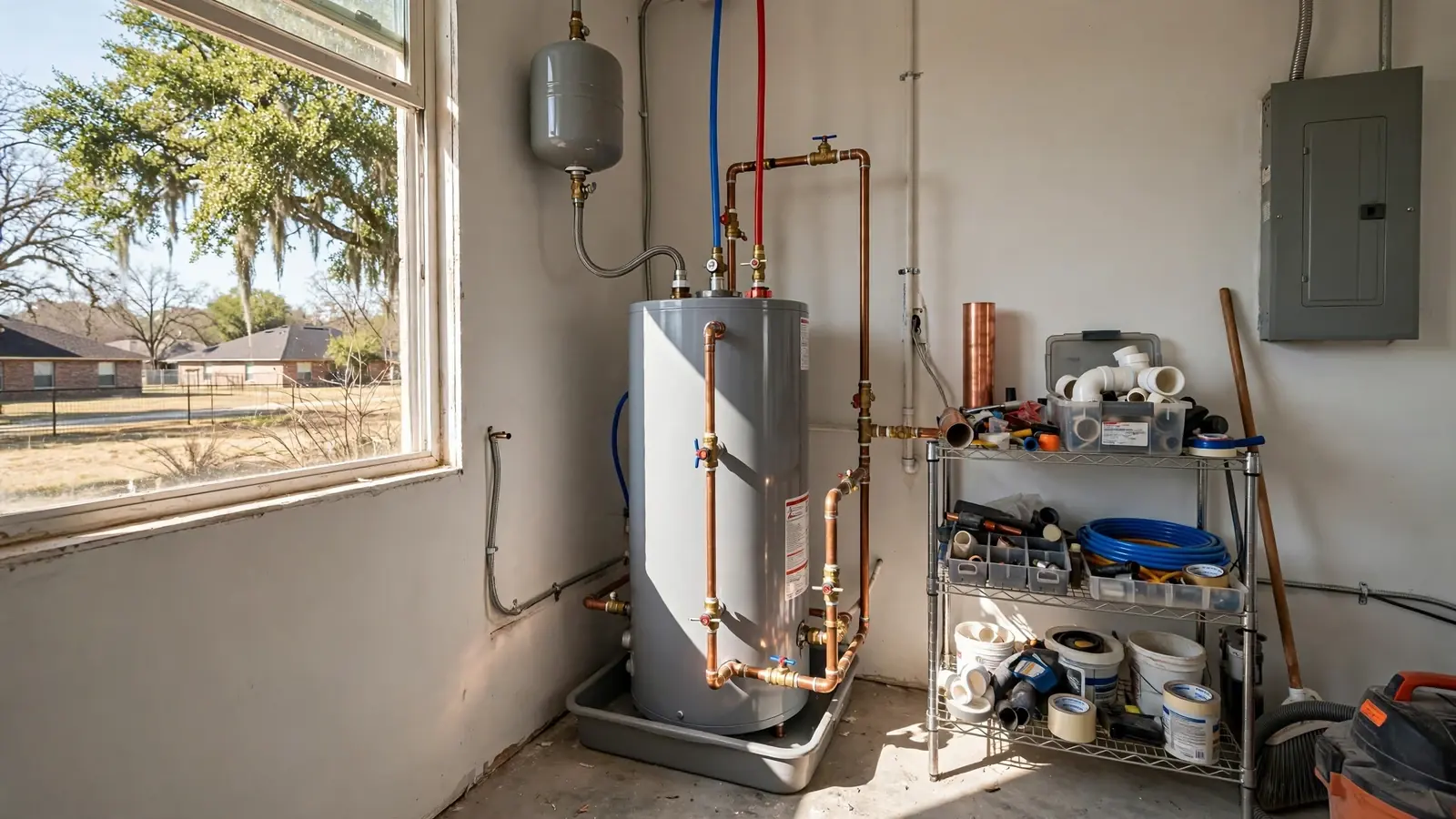
A good install is more than setting a tank on the floor. The size has to suit the household, the vent or exhaust has to carry gases outside, and the shutoffs, drain pan and pressure relief need to sit where you can reach them years from now.
If your current heater has already failed, our page on water heater replacement covers that situation. This page is for the planned job.
Comparing install types at a glance
The kind of job decides the work involved. This table shows how the common installs differ, so you know what to expect before we visit.
| Situation | What changes | Extra work to expect | Planning time |
|---|---|---|---|
| Like-for-like swap | Same fuel, same location | Connections, relief valve, drain pan check | Short |
| Gas to electric or hybrid | New power, new space needs | Wiring, circuit check, venting removal | Medium |
| Remodel with a moved heater | New location, new lines | Supply, drain and venting or power routing | Medium to long |
| New construction or addition | New unit on new lines | Rough-in, pressure test, permit coordination | Long |
| Condo closet upgrade | Fixed space, shared building | Access rules, shutoff location, building approval | Medium |
What to settle before the install day
A few decisions made early save time on the day. We can help you work through them during the first visit.
- Fuel type and what the home already hasGas needs a supply line and a vent path. Electric needs a suitable circuit. The existing setup often decides which is practical.
- Size for the householdCapacity should match how many people use hot water and how many fixtures run at once. We ask about showers, tubs and appliances, not just bedrooms.
- Where the unit will sitSpace around the heater matters for service and airflow. A closet that was fine for a small unit may not suit a taller one.
- Shutoff and drain placementA reachable shutoff valve, a drain pan with a drain line and a safe discharge point for the relief valve are standard parts of a clean install.
- Expansion tank and pressureMany installs add an expansion tank to absorb pressure changes from heated water. We check whether your system needs one.
- Building rules for condosManagement may require notice, certain work hours or an approved contractor list. Ask before you book.
Installing a heater in Hallandale Beach buildings
Census figures show a 1975 median build year here, with about 70 percent of units in buildings of 20 or more. For an install, that matters in two ways: older closets and chases were laid out for smaller units, and shared walls mean noise, water and shutoffs all involve neighbors or management.
If you live in a condo, plan for access. A freight elevator, a loading window or an association form can set the schedule more than the plumbing does. Tell us what your building requires when you call and we plan the visit around it.
Permits for a planned install
The city's Water Heater Replacement Data Form, which supplements the county's building permit application, covers replacement only, so a brand new install or a moved heater may involve different paperwork. Permit rules vary, so ask the Hallandale Beach Building Division about your project.
How a planned install is done
The work moves in a set order, so each stage is checked before the next one starts.
Site visit and sizing
We look at the space, the fuel supply, the venting path and your hot water use, then recommend a type and a capacity.
Rough-in or prep
For new locations we run supply, drain, gas or power lines and pressure test them before the heater arrives.
Set the unit
The heater goes on a drain pan, level and with room to service, with a drain line piped to a safe point.
Connect and vent
Water, gas or electric and venting are connected. The relief valve gets a discharge line, and an expansion tank is added where it is needed.
Test and hand over
We fill, check for leaks, light or power the unit and set the temperature. We show you the shutoffs and the controls.
Before you commit to a location
Walk through the proposed spot and ask three questions. Can a person reach the shutoff and the drain valve? Is there a safe place for the relief valve to discharge? Could the unit be removed later without tearing out a wall?
A heater that is hard to reach is also hard to maintain, and a spot that floods easily needs a pan and a drain line. Fixing these at the planning stage costs far less than correcting them later.
What shapes the cost of an install
Pricing a job before seeing the space would be a guess. A clear price comes first, and these items drive it.
A new unit is rarely an insured loss, though water damage from a failed install may be. Your insurer or association can say what applies. To get a number for your project, call us and we set up a visit.
A quick pre-install checklist for condo owners
Ask management for the building's contractor rules, the location of your unit shutoff and any required notice before water is turned off. Take photos of the closet and the current heater's data label.
Confirm whether the building allows changing fuel type. Some buildings limit gas or require approval for electrical changes. If the project also touches old supply lines, our repiping service and plumbing installation work can be scoped in the same visit.
Questions homeowners ask
Size is about how much hot water you use at the same time. We ask how many people live there, how many baths and appliances run together, and how fast you need recovery. A bigger tank is not always better, and an undersized one runs short.
Many installs include one, because heated water expands and pressure has to go somewhere. Whether yours needs one depends on the system, so we check it on the visit and explain the reasoning.
Often yes, if there is room for the unit, a venting path or power supply, and a safe drain. Moving it means new lines, so it is best planned before walls are closed.
Many buildings have rules about contractors, work hours and shutoff notice. Some also limit fuel changes. Ask management before booking, and tell us what you hear.
The city has a data form for water heater replacement, filed with the building permit application. It applies to replacement, so a brand new install may be handled differently. Ask the Hallandale Beach Building Division what applies to yours.
Often yes, if it suits your fuel type and space. We look at the data label and the installation needs before the visit, and tell you if anything is missing.
Sources and official references
The governing standard for plumbing work in Florida is the Florida Building Code, Plumbing (8th Edition, 2023), with the 9th Edition scheduled to take effect December 31, 2026. This page is general information and not a code interpretation, so confirm requirements with the city Building Division.